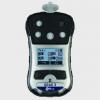
The Draeger X-pid® 9500+ rental is a selective PID gas measurement device is ideal for users who frequently test for hazardous toxic substances. Benzene, butadiene and other volatile organic compounds (VOCs) are carcinogenic even in the smallest concentrations. Selective measurement is necessary because other gases and vapours are often also present. The gas measurement device allows for short test times and laboratory-quality results.
This portable PID offers two modes for an efficient measurement strategy - “Seeker” mode is a broadband measurement for pre-testing and localising measurement points. It allows continuous, direct-reading measurement of the total concentration of all VOCs present. “Seeker” mode is similar to using a single-PID gas measurement device. “Analysis” mode allows selective measurement for monitoring specific toxic compounds. Pre-defined target compounds can be precisely measured in seconds. “Analysis” mode is similar to gas chromatography analyses conducted in the laboratory.
The wireless (bluetooth) handheld Class 1 Div 1 Control Unit with built in mobil app makes using the sensor unit lightweight and very easy to use. The Dräger X-pid 9500 is optimized for measuring in this concentration range and detects benzene starting at 50 ppb.
Draeger X-pid 9500 / 9500+ - Selective measurement of VOCs in gas mixtures - Ideal for frequent testing of toxic and carcinogenic substances - Laboratory-quality results even at very low concentrations - Benzene detection from 5 ppb (X-pid 9500+) / 50 ppb (X-pid 9500) - No consumables required per measurement
Cost savings - Because no consumables are used to take measurements, operating costs can be reduced. For users with high measurement needs, the Dräger X‑pid 9500/9500+ quickly pays for itself. For example, it doesn’t require pre-tubes, which also makes it easier to use and helps prevent user errors. On the basis of 200 measurements per year, the Dräger X‑pid 9500/9500+ is generally more cost-effective than comparable measurement systems.
Cost savings - Because no consumables are used to take measurements, operating costs can be reduced. For users with high measurement needs, the Dräger X‑pid 9500/9500+ quickly pays for itself. For example, it doesn’t require pre-tubes, which also makes it easier to use and helps prevent user errors. On the basis of 200 measurements per year, the Dräger X‑pid 9500/9500+ is generally more cost-effective than comparable measurement systems.
Two modes for an efficient measurement strategy - “Seeker” mode is a broadband measurement for pre-testing and localising measurement points. It allows continuous, direct-reading measurement of the total concentration of all VOCs present. “Seeker” mode is similar to using a single-PID gas measurement device. “Analysis” mode allows selective measurement for monitoring specific toxic compounds. Pre-defined target compounds can be precisely measured in seconds. “Analysis” mode is similar to gas chromatography analyses conducted in the laboratory.
Up to 90% time savings - The Dräger X‑pid 9500/9500+ requires no preparation and is ready to use after a brief start-up phase. Selective measurement in “Analysis” mode takes only a few seconds. A benzene measurement starts with the push of a button and is completed in only 30 seconds. After another 60 seconds, the device is ready to measure for benzene again. Compared with other detection systems, the Dräger X‑pid 9500/9500+ saves considerable time and enables further monitoring to be undertaken. Simultaneous measurement of other compounds, like benzene and butadiene, further reduces testing times.
Low detection limits - Concentrations of toxic compounds in the air at work sites must not exceed threshold limit values. Mandatory time-weighted averages in the low ppb to ppm range need to be performed for carcinogenic vapors like benzene, acrolein or other. The Dräger X‑pid 9500 is optimized for measuring in this concentration range and detects benzene starting at 50 ppb. The X-pid 9500+ variation contains an improved calculation model that allows lower detection limits (benzene starting at 5ppb).